
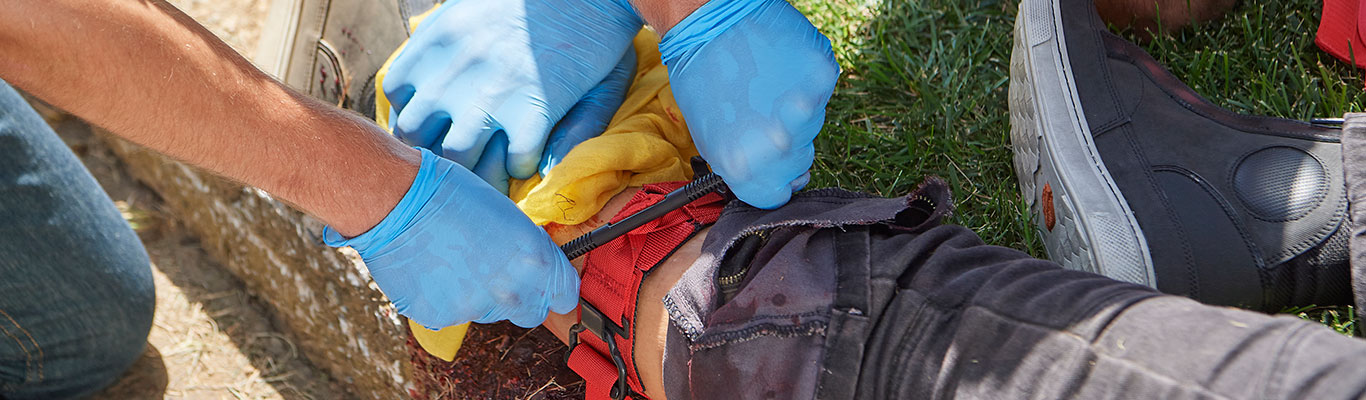
Why Two Tourniquets Belong in Every Serious IFAK
Modern trauma doctrine has evolved. Discover why carrying two tourniquets isn't overkill—it's the new standard for serious outdoor preparedness.
Walk into any well-equipped first-responder course today and you'll notice something different from the trauma training of a decade ago: students are carrying not one, but two tourniquets in their individual first aid kits (IFAKs). For many people new to wilderness medicine or tactical casualty care, this raises an obvious question—is carrying two tourniquets overkill?
The short answer is no. The longer answer involves a significant shift in trauma doctrine, hard lessons learned from combat medicine, and a practical understanding of what can go wrong in the backcountry, on a remote trail, or at the scene of a vehicle rollover. If you're serious about being prepared for life-threatening hemorrhage, a single tourniquet is no longer considered adequate.
Let's break down why.
How Tourniquet Doctrine Has Changed
For decades, the prevailing wisdom in emergency medicine treated the tourniquet as a weapon of last resort. Medical students, EMTs, and even military medics were taught that applying a tourniquet meant accepting the loss of the limb. The thinking was straightforward: cut off blood flow long enough to stop bleeding, and you'd save a life at the cost of an arm or leg.
This belief drove a generation of providers to delay tourniquet application, relying instead on direct pressure, elevation, and pressure points—often while a casualty continued to bleed out. The fear of losing a limb cost lives.
That doctrine has been thoroughly overturned. Decades of data from the conflicts in Iraq and Afghanistan, combined with civilian trauma research, have transformed how we think about tourniquets. The current best practice, supported by the Committee on Tactical Combat Casualty Care (TCCC) and adopted by civilian programs like Stop the Bleed, is dramatically different:
- Apply a tourniquet early when direct pressure and wound packing fail to control life-threatening extremity hemorrhage.
- Tourniquets can typically remain in place for 2 hours or more without causing permanent neurovascular damage, provided the patient reaches definitive care.
- Limb loss from properly applied tourniquets is rare—far rarer than death from uncontrolled bleeding.
- If one tourniquet fails to stop the bleed, apply a second tourniquet proximal to (above) the first.
That last point is critical, and it's where the case for carrying two tourniquets begins.
Why a Single Tourniquet May Not Be Enough
A properly applied tourniquet works by compressing the underlying arteries until blood flow stops distal to the device. In a perfect scenario—a clean limb, a cooperative patient, and a well-placed device—a single tourniquet does the job.
The real world is messier.
Large Limbs and High-Pressure Bleeds
The thigh, in particular, is a challenging location for tourniquet application. The femoral artery sits deep within dense muscle tissue, and on a large or muscular patient, a single tourniquet may not generate enough circumferential pressure to fully occlude arterial flow. In these cases, current TCCC guidelines call for a second tourniquet placed side-by-side and just above the first to achieve complete hemorrhage control.
Equipment Failure
Tourniquets are mechanical devices. Windlasses can break under torque, internal straps can tear, and counterfeit or poorly manufactured tourniquets may fail entirely under load. If your only tourniquet fails mid-application while your patient is exsanguinating, you don't have time to improvise. You need a backup—now.
Improper Initial Placement
Under stress, with shaking hands and limited light, even trained responders can place a tourniquet too low, too loose, or over a joint. Sometimes the right move isn't to readjust—it's to leave the first device in place and stack a second one above it to gain control while precious seconds tick by.
The Three Core Benefits of Carrying Two Tourniquets
Beyond the doctrinal reasons, there are practical, scenario-driven justifications for doubling up your tourniquet capacity. Here are the three biggest.
1. The Ability to Apply a Second Tourniquet When the First Isn't Enough
As discussed above, current trauma doctrine explicitly calls for the application of a second tourniquet when a first device fails to stop arterial bleeding. This isn't a fringe technique—it's standard practice taught in TCCC, TECC (Tactical Emergency Casualty Care), and Stop the Bleed courses across the country.
If you've only packed one tourniquet, you've taken this option off the table before the incident even begins. You're betting that your single device will be perfectly placed, perfectly functional, and adequate to the bleed you encounter. That's a bet you don't need to make.
2. The Ability to Address Multiple Injuries on the Same Patient
Trauma rarely respects neat patterns. A rollover on a forest service road, a chainsaw accident while clearing trail, an ATV crash—these incidents commonly produce multiple wounds across multiple extremities. A patient with arterial bleeding in both legs needs two tourniquets, period. A patient with a mangled arm and a deep thigh laceration needs two tourniquets.
If you're the first competent responder on scene and you've only got one device, you're forced into a triage decision no one wants to make: which bleed do you control while the other one kills your patient?
3. The Ability to Treat Multiple Injured People
Group activities—overlanding convoys, hunting parties, search-and-rescue operations, family backcountry trips—mean multiple potential casualties. A single incident can produce two or three injured people, and not everyone in the group will be carrying their own kit (though they should be).
Carrying a second tourniquet means you can hand one off to another trained responder, or apply it to a second patient yourself while waiting for additional help. In a mass casualty scenario, even one extra tourniquet can be the difference between a survivable and unsurvivable outcome for someone in your group.
How to Stage Two Tourniquets in Your IFAK
Owning two tourniquets isn't enough. They need to be staged so you can access them quickly under stress. At TimberRaven, we teach a simple, proven configuration that's worked across thousands of hours of student training.
Tourniquet One: Outside the Kit, Immediately Accessible
Your primary tourniquet should live on the outside of your IFAK or kit, mounted in a dedicated holder or attachment point. The reasons are straightforward:
- Speed. When seconds matter, you don't want to be fumbling with zippers, Velcro, or internal pouches. A tourniquet mounted externally can be deployed in under five seconds.
- One-handed access. If you're the casualty and need to self-apply, you may only have one functional hand. External mounting makes self-application possible.
- Identifiability. Another responder grabbing your kit can immediately see and access the tourniquet without searching.
Use a quality tourniquet holder—rubber retention bands, kydex carriers, or purpose-built MOLLE pouches all work well. Keep the device unfolded or in a "combat ready" configuration so it's ready to apply without setup.
Tourniquet Two: Inside the Kit, Grouped with Hemorrhage Control
Your secondary tourniquet should live inside your IFAK, grouped logically with your other bleeding control supplies—hemostatic gauze, pressure bandages, wound packing material, and gloves. This serves several purposes:
- It's protected from the elements and incidental damage during normal use.
- It's organized alongside the rest of your hemorrhage control tools, so once you've initiated treatment, everything you need is in one place.
- It serves as a clear backup—if the primary fails or a second device is needed, you know exactly where it is.
Which Tourniquets Should You Carry?
Not all tourniquets are created equal. The Committee on Tactical Combat Casualty Care recommends only a handful of devices based on rigorous testing. The two most widely used and trusted are:
- CAT (Combat Application Tourniquet) – the workhorse, simple windlass design, easy to train on.
- SOF-T Wide (Special Operations Forces Tourniquet, Wide version) – metal windlass, robust construction.
Whatever you choose, buy from a reputable source. The market is flooded with counterfeit tourniquets, particularly through online marketplaces. A counterfeit CAT may look identical to a genuine one but fail catastrophically under load. Buy directly from the manufacturer or a known medical supplier. Your life—or someone else's—depends on it.
Training Is Non-Negotiable
Carrying two tourniquets does nothing if you don't know how to use them. Tourniquet application is a perishable skill, and the difference between a properly applied device and a poorly applied one is the difference between saving a life and watching someone bleed out around a tourniquet that wasn't tight enough.
At minimum, every member of your outdoor party, overlanding convoy, or training cadre should:
- Complete a hands-on Stop the Bleed course or equivalent.
- Practice tourniquet application on themselves and others at least quarterly.
- Know how to self-apply with one hand to any extremity.
- Understand when to apply, when to convert, and when to leave a tourniquet in place.
- Be able to identify failure and apply a second device proximal to the first.
If your last tourniquet training was a five-minute demonstration at a hunter safety course in 2015, you are not prepared. Refresh your training with qualified instructors who can stress-test your skills under realistic conditions.
The Bottom Line
Carrying two tourniquets isn't overkill—it's the current standard for anyone serious about being prepared for life-threatening trauma. The doctrine has evolved because the evidence has evolved: early tourniquet application saves lives, limb loss is far less common than once feared, and a single device is not always enough to control bleeding in real-world conditions.
Stage your primary tourniquet on the outside of your IFAK for immediate access. Stage your secondary inside the kit, grouped with your hemorrhage control supplies. Buy quality devices from reputable sources. Train, train, and train again.
The wilderness, the trail, and the road don't care how prepared you think you are—they only respond to how prepared you actually are. When the worst happens, you'll either have what you need or you won't. Carry two tourniquets. Learn
TimberRaven Critical Response LLC
Instructor & field professional at TimberRaven Critical Response LLC
Continue Reading
The 10 Most Common Backcountry First Aid Scenarios Every Hiker Should Master
A decade of wilderness injury data reveals the 10 most common backcountry medical scenarios. Master these, and you'll be ahead of 90% of recreators on the trail.
The M.A.R.C.H. Protocol: Why TimberRaven Builds Backcountry Medical Training Around This Battlefield-Proven Framework
Discover how the M.A.R.C.H. protocol—forged in combat medicine—saves lives in the backcountry, and why TimberRaven builds our wilderness trauma training around it.
Real Backcountry Emergency Scenarios: How Prepared Are You Really?
Walk through five realistic backcountry emergencies and find out if you'd actually survive them, or if it's time to upgrade your training.